


You have probably grabbed a Pringles can in the store a hundred times, twisted off the lid, and pulled out perfectly stacked chips. But have you ever paused to think why it is shaped this way, or how every measurement from height to diameter affects the chips inside?
In this article, we will dive into Pringles can dimensions, explore the science behind the design, reveal the exact measurements of both cans and chips.
History of Pringles Cans
Pringles were introduced in 1968 by Procter & Gamble, created to solve the problem of broken, unevenly bagged chips. Fredric Baur designed the cylindrical, stackable chip container with a resealable lid and foil lining, ensuring freshness and consistent servings. This innovative design set a new standard in snack packaging design.
Over time, the can’s materials evolved from thick cardboard and metal bases to recycled paperboard, aluminum foil, and plastic lids, making it lighter and more sustainable. The core dimensions stayed nearly identical to preserve chip stacking and storage efficiency, making the Pringles can an enduring icon of precision packaging worldwide.
Keep reading, 245 Mosquito Puns and Jokes That will Have You Scratching
Why Pringles Can Dimensions Matter
When you think of snack packaging, bags come to mind. They are cheap, flexible, and easy to transport. But bags crush chips, trap air unevenly, and waste shelf space. Pringles did something different, they designed a cylindrical chip container that holds chips vertically, creating a controlled environment for storage, transport, and freshness.
The dimensions of a Pringles can play a crucial role in several ways:
- Chip protection: Vertical stacking prevents breakage during shipping.
- Freshness maintenance: Tight fitting lids and foil linings reduce air exposure.
- Shelf efficiency: Cylindrical design fits better in stores and pantries.
- Reuse and DIY potential: The tube’s dimensions make it perfect for organization projects.
Every curve, diameter, and height measurement has a purpose. Alter one, and chips might crack, lids might fail, or storage efficiency drops.
What Defines a Standard Pringles Can
When we talk about a standard Pringles can, we are referring to the classic 5.5 ounce tube sold worldwide. While minor regional differences exist, the overall proportions remain consistent due to global packaging standards and engineering constraints.
This standard can serves as the baseline for mini cans, party size cans, and other variations. It is not just about marketing this tube embodies ergonomic packaging and precision engineering, optimized over decades.
Exact Pringles Can Dimensions
Let’s break down the dimensions of a Pringles can precisely:
| Measurement | Imperial | Metric |
|---|---|---|
| Height | 10 inches | 25.5 cm |
| Outer diameter | 3 inches | 7.6 cm |
| Inner diameter | 2.9 inches | 7.4 cm |
| Circumference | 9.42 inches | 24 cm |
| Radius | 1.5 inches | 3.8 cm |
| Total volume | 25 oz | 750 ml |
| Net weight (filled) | 5.2–5.5 oz | 147–156 g |
Notice how small differences matter: the inner diameter is slightly smaller than the outer, ensuring the chips fit snugly without excessive wobble. The usable height, after accounting for the lid and base, measures around 9.4 inches which is crucial for stacking chips vertically.
Find out more, 350+ Hilarious Troll Puns to Make You Laugh Out Loud
Usable Space and Storage Efficiency
The genius of the Pringles can structure lies in its space efficient packaging. It maximizes storage without wasting material:
- Wall thickness: ~0.04 inches, providing rigidity without extra bulk.
- Lid overlap: ~0.6 inches, sealing the tube airtight.
- Inner diameter: 2.9 inches, allowing a perfect vertical chip stack.
This careful balance ensures that chips remain intact while the can stays lightweight and portable.
Volume Calculations
The Pringles can functions as a near perfect cylinder. Its volume can be calculated using:
Volume = π × r² × h
Where r = 1.45 inches (inner radius) and h = 9.4 inches (usable height).
Volume ≈ 62 cubic inches ≈ 750 ml
This volume accommodates roughly 90–100 chips, depending on thickness and flavoring. Engineers even tweak dimensions slightly to balance chip quantity, shipping efficiency, and consumer satisfaction.
Different Pringles Can Sizes
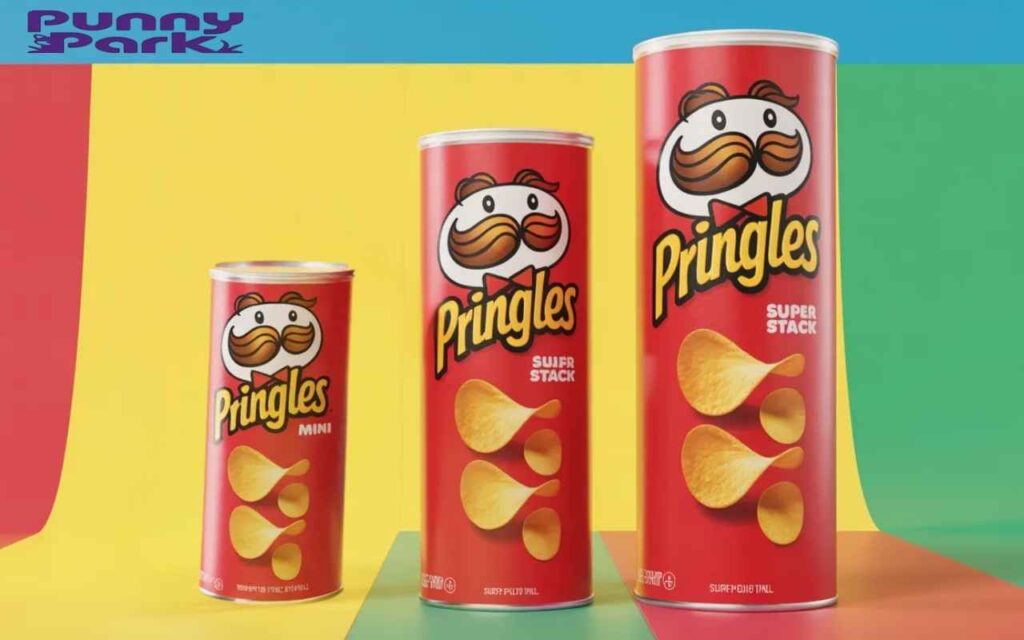
Pringles offers multiple sizes beyond the standard can, each designed for a specific purpose:
Mini Pringles Can
- Height: 5.3 inches
- Diameter: 2.9 inches
- Net weight: 1.3 oz
- Chips per can: 20–25
Ideal for airports, vending machines, and portion control, the mini can keeps the same cylindrical design in a smaller format. Its compact size makes it perfect for on-the-go snacking and easy storage in backpacks or lunch boxes.
Standard Pringles Can
- Height: 10 inches
- Diameter: 3 inches
- Net weight: 5.2–5.5 oz
- Chips per can: 90–100
This is the classic, globally recognized size. Its proportions are what define Pringles packaging design. The standard can is perfect for home pantry storage, providing a balance between portability and sufficient chip quantity for daily snacking or small gatherings.
See more puns, 320 Pizza Puns That will Make You Melt like cheese
Party / Super Stack Can
- Height: 11.5–12 inches
- Diameter: 3 inches
- Net weight: 6.84 oz
- Chips per can: 120+
Even taller cans maintain the diameter to preserve stackable chip design, preventing breakage during transport. The party can is ideal for sharing at events, parties, or family get-togethers, ensuring everyone gets a crisp, intact chip.
Weight and Engineering Considerations
The Pringles can weight is another aspect of its precision engineering:
- Empty can: ~38 grams
- Chips only: ~118 grams
- Total filled weight: ~156 grams
This weight distribution protects chips and ensures the can remains portable without compromising strength. The aluminum foil lining adds minimal weight while preserving freshness.
Dimensions of a Single Pringles Chip
Every can starts with the chip. The hyperbolic paraboloid chip, or saddle-shaped potato chip, allows perfect stacking. Here is what a typical chip looks like:
| Feature | Measurement |
|---|---|
| Chip length | 2.5–2.8 inches |
| Chip width (widest) | 1.75 inches |
| Chip width (narrowest) | 1.4 inches |
| Chip thickness | 0.06–0.09 inches |
| Individual chip weight | ~1.6 grams |
| Moisture content | 1.5–2% |
This shape ensures vertical chip stacking, chip breakage prevention, and uniform load distribution in the can.
Why the Can Is Cylindrical
Pringles cans are cylindrical for practical reasons:
- Even pressure distribution: Unlike boxes, cylinders have no weak corners.
- Compression strength: Cylinders resist crushing under stacked weight.
- Efficient shelf use: Cylindrical cans fit tightly and neatly.
- Ease of transport: Rolls smoothly in automated packing lines.
This shape also enhances consumer experience design, easy grip, simple storage, and portable for on-the-go snacking.
Continue reading, 240 Potato Puns That will Crack You Up Like a Crispy Fry
Hyperbolic Paraboloid Shape Explained
The saddle-shaped chip is not random. The hyperbolic paraboloid curve has a dual bend: one axis curves upward, the other downward. Benefits include:
- Snug nesting of chips
- Reduced cracking under vertical pressure
- Predictable alignment in stacking
This unique geometry is why the Pringles can diameter remains consistent worldwide, the container must fit the chip precisely.
Engineering Logic Behind the Can
Pringles packaging was developed under the supervision of Fredric Baur at Procter & Gamble. Engineers considered:
- Height-to-diameter ratios
- Lateral and vertical pressure points
- Chip vibration and movement during shipping
- Lid compression tolerances
The result is a precision-engineered snack tube that balances durability, portability, and aesthetics.
Materials Used
A Pringles can uses a multi-layer construction:
- Paperboard body: Recycled, rigid, and lightweight
- Aluminum foil lining: Keeps chips fresh
- Steel base: Adds stability
- Plastic lid: Resealable and airtight
- Food-grade coating: Safe and moisture-resistant
This combination creates a stackable, airtight chip container that’s also suitable for DIY upcycling.
Environmental Impact and Sustainability
Pringles cans are challenging to recycle due to mixed materials. Key points:
- Recycling rate: Variable, usually requires specialized programs like TerraCycle
- Material recovery: Paperboard is recyclable; aluminum and steel require separate processing
- Energy and water savings: Optimized by lightweight design
Pringles continues to explore sustainable packaging solutions, balancing durability with environmental impact.
Regional Variations
While the US can is 10 inches tall, variations exist:
| Region | Height | Diameter | Notes |
|---|---|---|---|
| North America | 10 inches | 3 inches | Standard |
| Europe | 9.8–10 inches | 3 inches | Metric tooling |
| Asia Pacific | 9–9.5 inches | 3 inches | Shelf and shipping constraints |
Despite these variations, the stackable design and hyperbolic paraboloid chips remain consistent.
STEM and Educational Applications
Pringles cans are not just snacks, they are learning tools.
Get inspired with more ideas, 250+ Laugh Out Loud Owl Puns: Hoot Worthy Jokes for Everyone
- Geometry demonstrations: Cylinders, volume, and surface area
- Physics experiments: Pressure, compression, and vibration
- Acoustics: Resonant frequency and sound wave propagation
- Engineering case studies: Material testing, lid tension, and vertical stacking
Students use cans to explore real world applications of math and physics in a tangible way.
DIY and Upcycling Projects
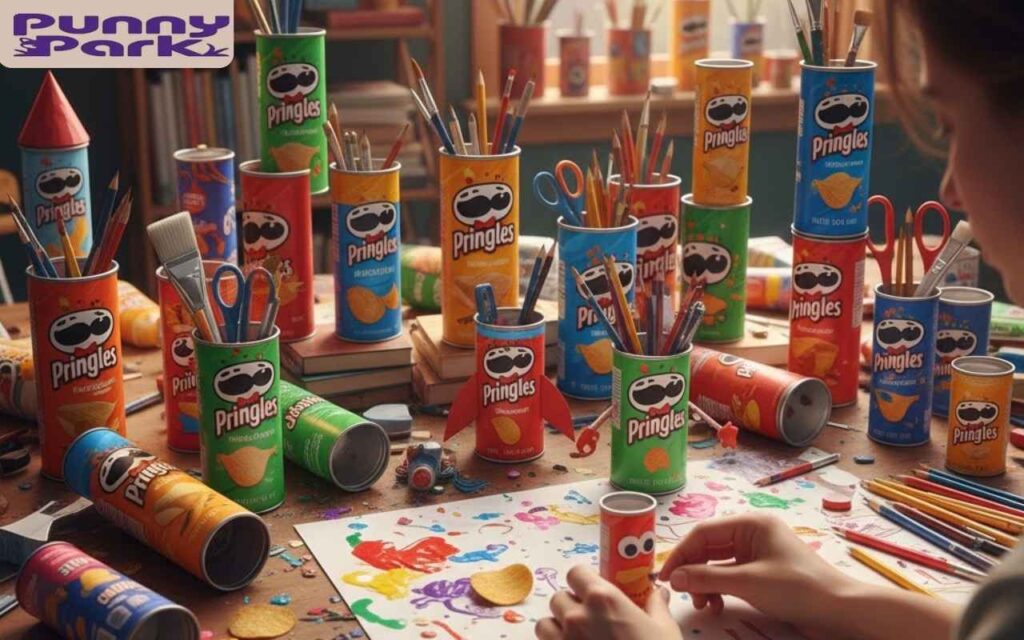
The dimensions of a Pringles can make it ideal for reuse:
- Pencil and pen holders
- Office organization for small items
- Art studio storage for brushes and paints
- Kaleidoscope or music tube construction
- Blueprint and paper storage
The uniform height, diameter, and rigid construction make it versatile for countless creative projects.
Physics and Acoustic Experiments
Pringles cans have even found a home in sound engineering. Their cylindrical shape and uniform volume allow for:
- Resonant frequency testing
- Acoustic node experiments
- Pressure diffusion tubes
- Portable DIY instruments
Engineers use them as low cost demonstration tools, thanks to predictable dimensions.
Future of Pringles Packaging
Future trends may include:
- Thinner paperboard walls for lighter carbon footprint
- Improved recyclable snack packaging
- Smart packaging sensors for freshness monitoring
- Biodegradable coatings for sustainable packaging solutions
Yet the cylindrical shape, height-to-diameter ratio, and stackable chip design will remain, because they are optimized for chips, storage, and consumer experience.
Case Study: Pringles Cans in Acoustic Classroom Experiments
Background: A group of high school physics teachers wanted a hands-on way to demonstrate resonance, sound waves, and frequency without expensive lab equipment.
Challenge: Traditional tubes and cylinders were either costly or fragile, limiting student participation in experiments. The teachers needed something durable, uniform, and inexpensive.
Solution: They used empty Pringles cans as acoustic tubes. The uniform shape and rigid structure allowed students to test how tube length affects pitch, explore resonant frequencies, and even compare sound amplification between different can heights.
Results:
- Students could visualize and measure frequency changes in real time.
- Participation increased because each student could handle their own “instrument.”
- Teachers reported the experiment improved understanding of wave physics while making learning more engaging.
Lessons Learned:
- Everyday objects, when used creatively, can serve as effective educational tools.
- The uniform construction of Pringles cans makes them reliable for repetitive experiments.
- Hands on activities boost both comprehension and student enthusiasm for STEM.
Expand your knowledge, 150+ best Shark puns That Are Totally Fin-tastic
Stack & Count Challenge: Test Your Chip Stacking Skills
Ever wondered why Pringles chips stack so perfectly inside the can? Now it is your turn to put it to the test.
What you need:
- A handful of Pringles chips (any flavor)
- A flat surface like a table or countertop
How to play:
- Carefully remove chips from the can.
- Try to stack them vertically, one on top of the other without tipping.
- Count how many chips you can stack before your tower falls.
- For extra fun, try stacking different flavors or sizes, see if thicker or curved chips make the tower taller or wobbly.
What you will learn:
- The hyperbolic paraboloid (saddle) shape of each chip is no accident, it is designed for perfect vertical stacking.
- The diameter of the can was engineered to match chip size, preventing breakage and ensuring stability.
- You will see firsthand how precision in packaging dimensions translates into a smooth consumer experience.
Pro tip: Challenge your friends or family to see who can build the tallest chip tower. It’s a tasty STEM experiment disguised as a game.
5 Fun Facts About Pringles Cans
- Inventor’s Final Resting Place: Fredric Baur, the inventor of the Pringles can, was so proud of his creation that he requested to have part of his ashes buried in a Pringles can after he passed away.
- Used in Space: Astronauts on space missions have experimented with Pringles cans as makeshift containers and organizing tools inside the spacecraft due to their sturdy, compact design.
- Largest Can Pyramid: Pringles and Transmed Overseas set the Guinness World Record for the Largest Can Pyramid in Dubai. The massive structure utilized 31,001 cans, standing nearly 3 meters tall and 21 meters wide at the Ibn Battuta Mall.
- Emergency Seed Storage: In some communities, empty Pringles cans have been repurposed to store seeds for gardening, keeping them dry and protected from pests.
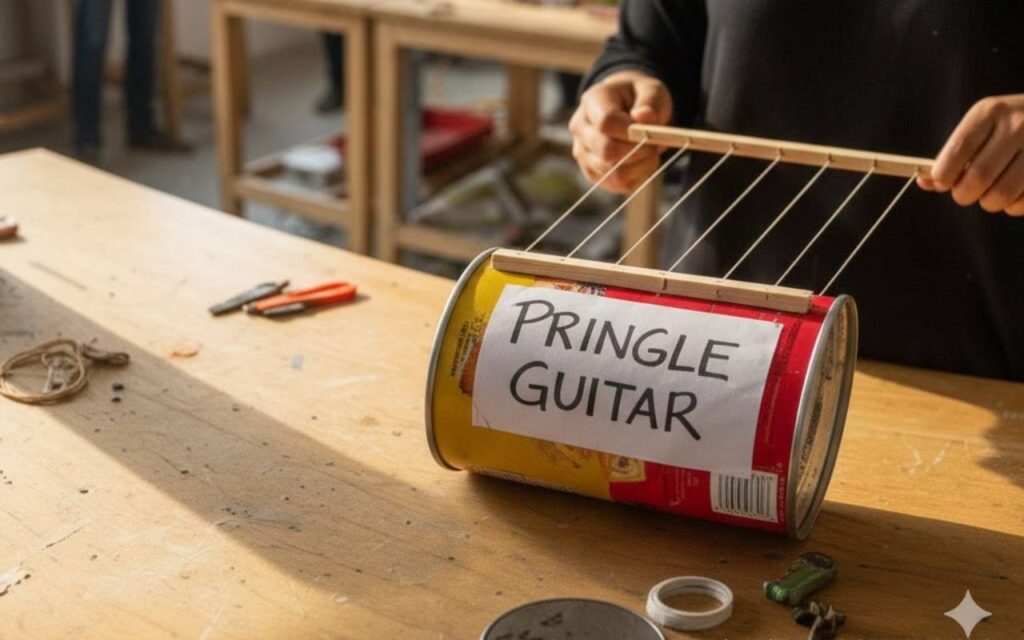
- Musical Instruments: Musicians and hobbyists have turned Pringles cans into percussion instruments by adding strings or rubber bands, demonstrating creative reuse in DIY music projects.
Conclusion
The Pringles can is much more than just a snack container. Its precise dimensions, cylindrical shape, and innovative chip design work together to protect chips, maximize freshness, and make snacking convenient. From mini cans to party stacks, every size reflects careful engineering that balances practicality, storage efficiency, and user experience.
Beyond the kitchen, the can inspires STEM experiments, DIY projects, and creative upcycling, showing that thoughtful design can turn everyday objects into learning tools and fun activities. Next time you twist open a Pringles can, remember, you are holding a perfect blend of science, design, and snack time enjoyment.
Even the simplest things, like a chip in a can, can teach us about design, science, and the joy of curiosity.
Frequently Asked Questions
1. Can Pringles cans be used for liquids or other foods?
While the Pringles can is designed for stacked chips, its airtight design can temporarily hold dry ingredients like pasta, rice, or candy. However, it is not suitable for liquids, as the foil lining and lid are not fully leak-proof.
2. Why do Pringles cans sometimes bulge at the lid?
A slight bulge occurs due to the nitrogen gas used to keep chips fresh. This gas cushions the chips during shipping and prevents breakage. A small bulge is normal and indicates the chips are still crisp.
3. Are all Pringles cans recyclable?
Pringles cans are partially recyclable. The paperboard body can be processed in some facilities, but the metal base and foil lining often require specialized recycling programs like TerraCycle. Standard curbside recycling may not accept them.
For more insights, Ultimate Collection of Snowman Puns: 300+ Jokes to Melt the Ice